
Contents
- 1 My Son Sanctuary Travel Guide: Everything You Need to Know Before You Visit
- 1.1 Discover Vietnam’s Ancient Cham Kingdom
- 1.2 Quick Facts Box
- 1.3 Introduction
- 1.4 What is My Son Sanctuary?
- 1.5 Where is My Son Sanctuary?
- 1.6 History of the Champa Kingdom
- 1.6.1 1st-5th centuries:
- 1.6.2 6th – 8th Centuries (Development and Conflicts with China and India)
- 1.6.3 9th – 10th Centuries (Period of Brilliant Development and Independence)
- 1.6.4 11th – 12th Centuries (Territorial Expansion and Conflicts with Dai Viet)
- 1.6.5 13th-15th centuries (Continuous wars and decline):
- 1.6.6 15th – 17th Centuries (Weakening and Collapse)
- 1.6.7 18th – 19th Centuries (Remnants of Champa and incorporation into Đại Nam)
- 1.7 Why is My Son a UNESCO World Heritage Site?
- 1.8 How to get to My Son Sanctuary from Hoi An and Da Nang?
- 1.9 Example of My Son Sanctuary Tour Vietnam Itinerary (From Hoi An)
- 1.10 How much is the My Son Sanctuary tour?
- 1.11 Best time to visit My Son Sanctuary?
- 1.12 What to see at My Son Sanctuary?
- 1.13 Traditional Cham Performance Show Schedule at My Son
- 1.14 My Son Sanctuary Entrance Fee?
- 1.15 What to Wear and Bring?
- 1.16 Useful Tips to Visit My Son UNESCO World Heritage Site?
- 1.16.1 Go Early in the Morning or Late in the Afternoon
- 1.16.2 Always Check the Weather Forecast
- 1.16.3 Wear Comfortable Walking Shoes
- 1.16.4 Dress Modestly and Respectfully
- 1.16.5 Bring Water and Sun Protection
- 1.16.6 Hire a Local Guide for Better Understanding
- 1.16.7 Visit the museum first
- 1.16.8 Prepare for Limited Food Options
- 1.16.9 Respect the Heritage and Ruins
- 1.16.10 Consider a Private Tour for Convenience
- 1.17 6 Best Things to do around My Son Sanctuary
- 1.17.1 Visit a Local Rice Paper Village
- 1.17.2 Visit the Ancient Citadel of Tra Kieu
- 1.17.3 Combine My Son Afternoon Tour & Hoi An Ancient Town with Lantern Boat Ride
- 1.17.4 Combine My Son Sunrise Tour with Visiting Thanh Ha Fish Market
- 1.17.5 Army US Jeep Morning Tour to My Son Sanctuary
- 1.17.6 Combine My Son Morning Tour & Coffee at Old Brick Factory
- 1.18 Guided Tours to My Son Sanctuary Vietnam
- 1.19 Explore My Son Temples in Vietnam with Premium Travel Vietnam
- 1.20 Frequently Asked Questions About My Son Sanctuary Vietnam
- 1.20.1 Is My Son Sanctuary worth visiting?
- 1.20.2 How much time do you need at My Son Sanctuary?
- 1.20.3 What is the best time to visit My Son Sanctuary?
- 1.20.4 How far is My Son Sanctuary from Hoi An?
- 1.20.5 How far is My Son Sanctuary from Da Nang?
- 1.20.6 Can I visit My Son Sanctuary without a guide?
- 1.20.7 What should I wear to My Son Sanctuary?
- 1.20.8 Is there a dress code at My Son Sanctuary?
- 1.20.9 What is the difference between My Son Sanctuary and Angkor Wat?
- 1.20.10 Can I combine My Son Sanctuary with Hoi An in one day?
- 1.20.11 Are there restaurants inside My Son Sanctuary?
- 1.20.12 What temple groups should I not miss?
- 1.20.13 Can children visit My Son Sanctuary?
- 1.20.14 Why is My Son Sanctuary a UNESCO World Heritage Site?
- 1.20.15 What are the best tours to My Son Sanctuary?
- 1.21 Final Thoughts on Visiting My Son Sanctuary
- 1.22 About the Author – Mr. Viet Nguyen
My Son Sanctuary Travel Guide: Everything You Need to Know Before You Visit
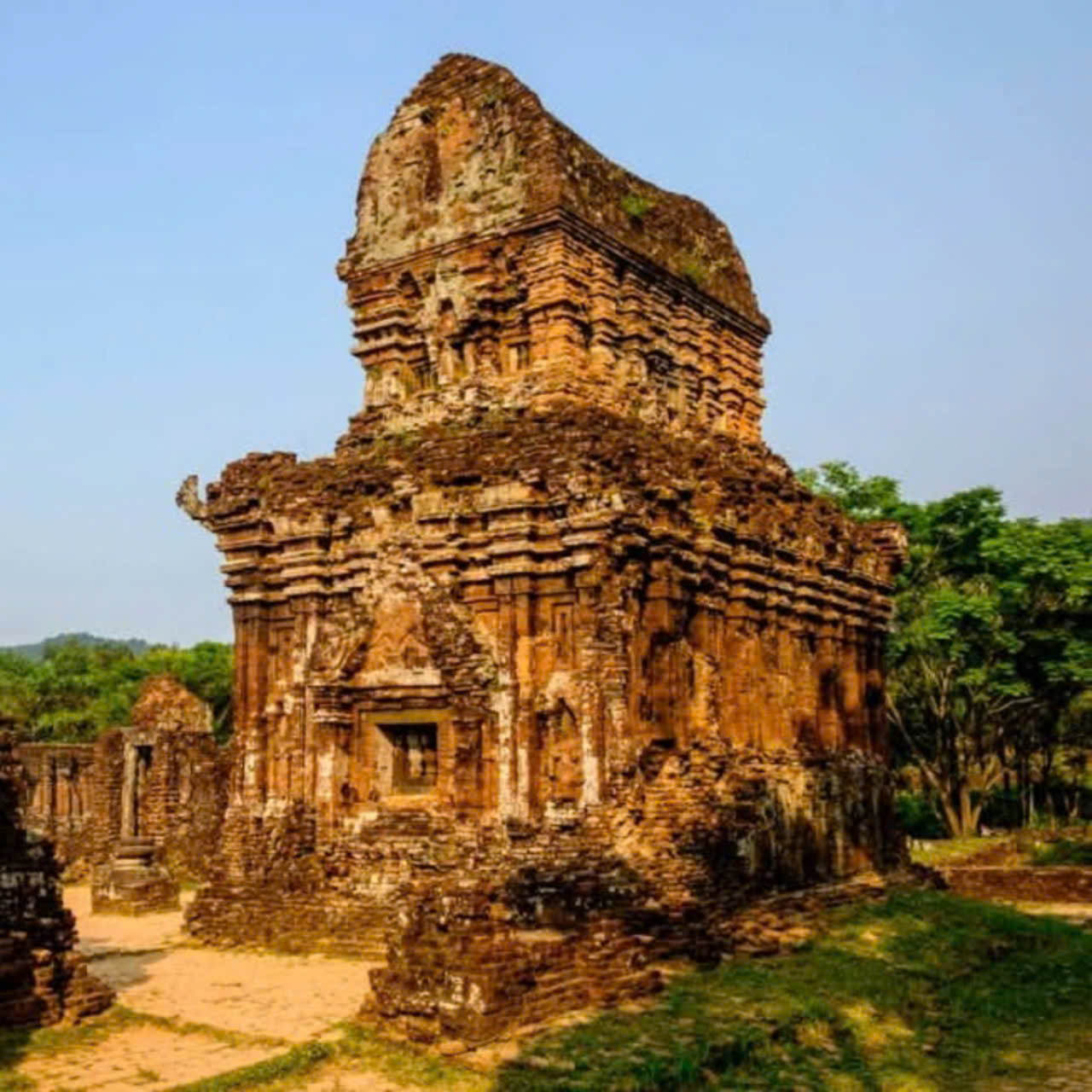
Discover Vietnam’s Ancient Cham Kingdom
Step into the heart of the ancient Champa civilization at My Son Sanctuary, a UNESCO World Heritage Site hidden within a lush valley in Central Vietnam. Explore centuries-old Hindu temples, uncover fascinating history, and learn everything you need to plan the perfect visit, from the best time to go and ticket prices to insider travel tips and recommended tours.
Quick Facts Box
| Information | Details |
|---|---|
| Location | Thu Bon Village, Da Nang city |
| UNESCO Status | World Heritage Site (1999) |
| Built | 4th–13th Century |
| Civilization | Champa Kingdom |
| Religion | Hinduism |
| Distance from Hoi An | ~40 km |
| Distance from Da Nang | ~70 km |
| Opening Hours | 6:00 AM – 5:00 PM |
| Recommended Visit Time | 2–3 Hours |
| Best Time to Visit | Late December – Late February |
Introduction
Nestled in a lush valley surrounded by jungle-covered mountains, My Son Sanctuary is one of Vietnam’s most remarkable historical treasures. Once the spiritual and political center of the Champa Kingdom, this UNESCO World Heritage Site is home to a collection of ancient Hindu temples built between the 4th and 13th centuries.
Today, visitors from around the world come to My Son to admire its mysterious red-brick towers, learn about the fascinating Cham civilization, and experience a side of Vietnam that predates Hoi An and Hue by centuries. Whether you’re interested in history, architecture, photography, or cultural heritage, My Son offers an unforgettable journey into the past.
In this complete My Son Sanctuary Travel Guide, you’ll discover the history of the site, the most important temple groups, ticket information, opening hours, the best time to visit, what to wear, useful travel tips, and the best tours from Hoi An and Da Nang.
What is My Son Sanctuary?
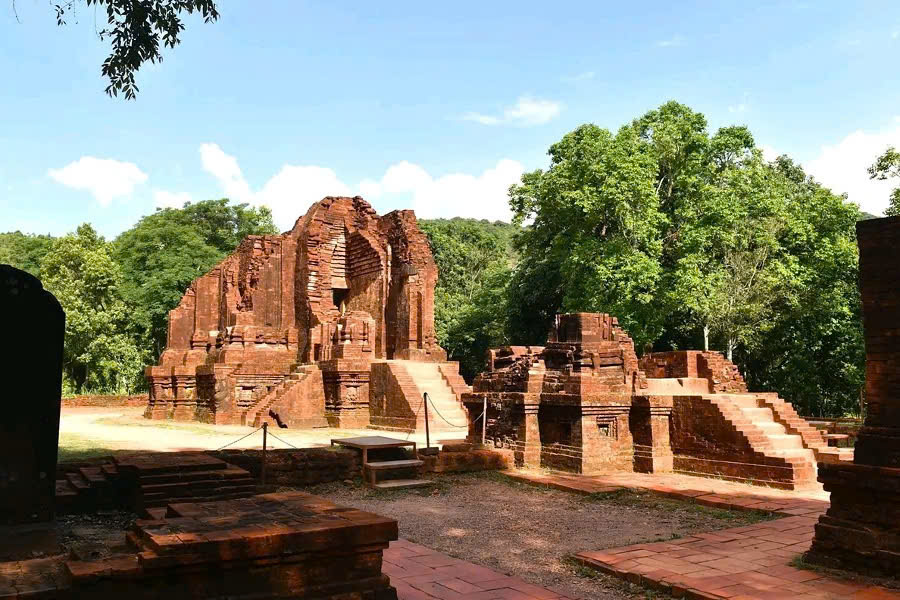
Once considered the spiritual center and the holy site of the ancient Champa Kingdom, My Son (often called beautiful mountains) is situated deep within a verdant valley in Central Vietnam, located around 60 kilometers southwest of Hoi An Ancient Town.
It was more than just a collection of temple towers; My Son Temples was a hallowed place where Cham kings performed rites for Shiva, the highest deity who guarded royal authority, legitimacy, and eternity. Every tower that rises from the earth serves as a quiet prayer that unites people with the universe and the divine.
My Son has a remote and hidden personality, cut off from the outside world by a valley that stretches almost two kilometers and is encircled by layered mountains. It was recognized as a UNESCO World Cultural Heritage Site in 1999 because of its remoteness, which has retained its religious value over generations.
The My Son Sanctuary is a striking illustration of the adaptation of Hindu art and architecture from the Indian subcontinent to a local community in Southeast Asia, and it is the most typical example of cultural exchange between many cultures, including India, Vietnam, China, Khmer, Malaysia, Indonesia…
Thanks to its sacred value across centuries, this former holy site earned its recognition as a UNESCO World Cultural Heritage Site in 1999.
Where is My Son Sanctuary?
History of the Champa Kingdom
1st-5th centuries:
Under Han administration, this territory was part of Nhat Nam Prefecture’s Tuong Lam District. The native residents have a long-standing Sa Huynh culture.
192 AD (Established): The Lam Ap state (the forerunner of Champa) was founded as a result of an uprising by the Tuong Lam people headed by leader Khu Lien.
3rd–5th centuries (Development): Lam Ap consistently extended its domain southward, reaching the region of Panduranga, which is now Ninh Thuan/Binh Thuan. This country had a robust maritime economy and rapidly assimilated Indian civilization, particularly Sanskrit and Hinduism. while also developing a strong maritime economy.
Champa’s first state, Lam Ap, was established in 192 AD. This state included the area that is now Hue. The people of Lam Ap adopted Hindu ideology and culture.
The Cham people were found to have utilized Sanskrit inscriptions on stone steles during the fourth century. There was also a Cham script used in the spoken Cham language. To put it another way, the Cham people had their own writing system and language.
6th – 8th Centuries (Development and Conflicts with China and India)
605: Following an assault by the Sui Dynasty (China), the Champa ruler was forced to temporarily capitulate.
758: The capital was relocated to Vijaya (Binh Dinh); during this time, Champa was prosperous, and many significant architectural projects were built.
9th – 10th Centuries (Period of Brilliant Development and Independence)
In 875, under King Indravarman II, Champa reached its zenith with the establishment of the new capital, Indrapura (Quang Nam).
982: In a significant battle with Dai Co Viet, King Le Hoan defeated King Paramesvaravarman I by waging war against Champa.
11th – 12th Centuries (Territorial Expansion and Conflicts with Dai Viet)
1044: Champa suffered several losses after King Jaya Simhavarman II was killed by an invasion by King Ly Thai Tong of Dai Viet.
1069: Dai Viet’s King Ly Thanh Tong subjugated Champa and took King Rudravarman prisoner. III. Following the defeat, Champa was forced to give up three provinces to Dai Viet: Dia Ly, Ma Linh, and Bo Chinh.
13th-15th centuries (Continuous wars and decline):
In 1220, Champa joined forces with Dai Viet to oppose the Mongol Empire. 1283: Under the leadership of King Jaya Simhavarman III (Che Man), Champa successfully repelled an invasion by the Mongols led by King Kublai Khan.
1390: Champa lost a great commander and started to deteriorate after King Che Bong Nga was slain in combat with Đʻi Việt.
15th – 17th Centuries (Weakening and Collapse)
In 1471, Dai Viet, led by King Le Thanh Tong, began a massive campaign that resulted in the occupation of Vijaya (Bình Đơnh), the deaths of tens of thousands of Champa, and the division of Champa into smaller kingdoms. Only the Panduranga region (Ninh Thuan and Binh Thuan) remained to Champa.
1693: After Lord Nguyen Phuc Chu invaded Panduranga, it was renamed Thuan Thanh town and formally joined Dang Trong.
18th – 19th Centuries (Remnants of Champa and incorporation into Đại Nam)
1832: King Minh Mạng of the Nguyen Dynasty abolished the last Champa kingdom in Panduranga, completing the incorporation of Champa into the territory of Dai Nam.
Why is My Son a UNESCO World Heritage Site?
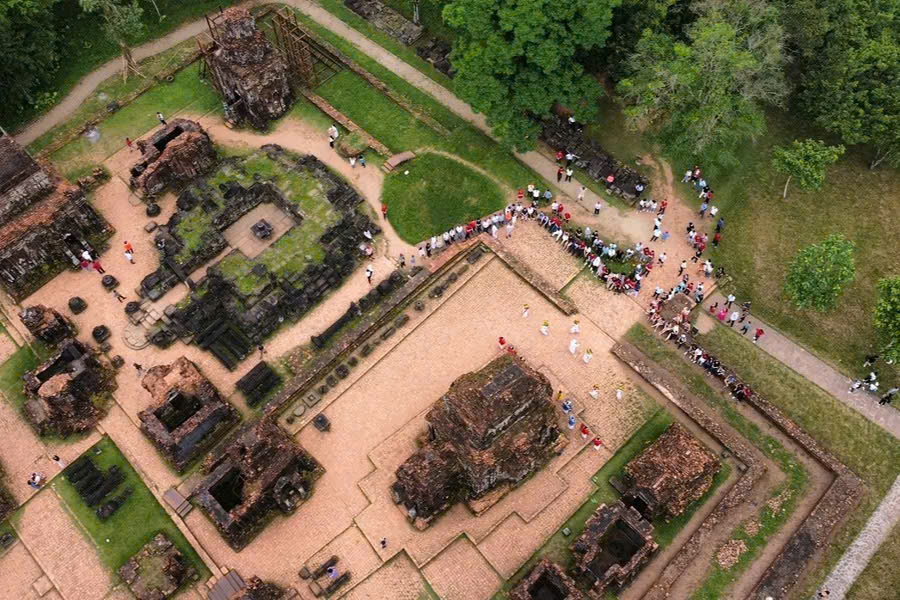
My Son Sanctuary (Quang Nam) was recognized by UNESCO as a World Cultural Heritage site in 1999 thanks to three core values:
Unique & Magnificent Hindu architectural complex:
It is the most important Hindu temple complex in Southeast Asia, reflecting the development of the Champa kingdom from the 4th to the 13th centuries.
Throughout history, the Champa people constructed temple complexes with distinctive architectural elements as a result of their interactions with other cultures. Red-fired bricks and stone pillars were used to build these Champa temples, which were stacked in several tiers of different heights to create an extraordinarily striking architectural complex.
Every temple is embellished with motifs and symbols that symbolize the people’s religious beliefs and faith while also holding special values and meanings associated with the historical eras of ancient Champa who created magnificent Hindu structures.
Evidence of cultural exchange:
Constructed by the Champa Kingdom between the fourth and thirteenth centuries, My Son Sanctuary is one of the most significant examples of ancient Southeast Asian Hindu temple architecture that has survived, earning it recognition as a UNESCO World Heritage Site.
The unmistakable proof of cultural interchange between India and the Champa civilization is one of the main arguments for its UNESCO inscription. The sculptures and temples at My Son were not made in a vacuum; rather, they show the profound impact of Indian Hinduism, which expanded throughout Asia via marine trade routes. This is evident in the architectural concept of sacred mountain temples that symbolize Mount Meru, the mythical center of the cosmos in Hindu cosmology, as well as in the religious symbolism and Sanskrit inscriptions used.
The elaborate carvings of Hindu deities like Shiva and legendary themes, as well as the pyramid-shaped brick structures, demonstrate how local Cham artisans transformed Indian religious concepts into their own distinctive artistic style. My Son is a unique and priceless example of cross-cultural interaction in ancient Southeast Asia because of this blending of cultures, which is precisely what UNESCO aims to conserve.
Mysterious construction techniques:
Another fascinating reason why My Son Sanctuary is globally significant is its mysterious ancient brick construction techniques.
The Cham builders used fired clay bricks so precisely fitted that the joints are almost invisible, and no clear mortar has ever been confirmed. This has led to ongoing debate about how the structures were bonded over 1,000 years ago.
Even more unusual is the way artisans carved detailed patterns directly onto already-fired bricks, including Hindu deities and sacred symbols—something very rare in ancient architecture.
Some theories suggest the use of natural organic substances or plant-based resins, while others point to advanced polishing and interlocking methods. However, no single explanation is proven.
This combination of advanced engineering, artistic skill, and unresolved mystery is one of the key reasons My Son is recognized as a UNESCO World Heritage Site.
How to get to My Son Sanctuary from Hoi An and Da Nang?
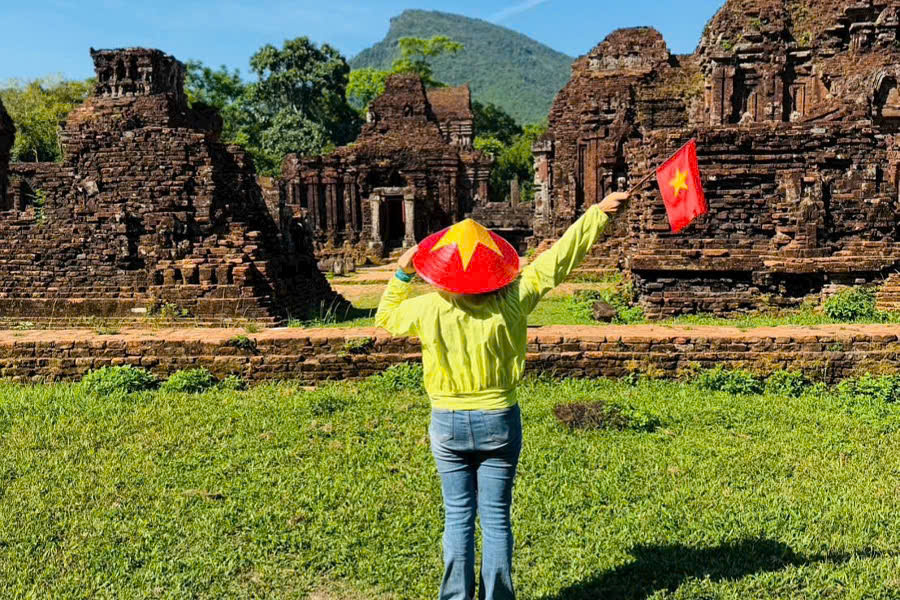
There are many ways to travel from Hoi An or Da Nang to My Son Sanctuary. However, there are three best ways to travel there. They are the following:
By taxi
A cab is the best option for those who need a private vehicle fast to go to My Son. There are a number of taxi services available in Hoi An, and naturally, they employ a large number of drivers and own numerous vehicles. Let’s go to the reception and explain the plan to those there if you don’t have a local SIM card to contact one.
Prior to making any decisions, be sure you are aware of the cost. In Vietnam, the fare is metered, and it costs roughly 15,000 VND for a long-distance drive, as from Hoi An to My Son. Additionally, parking and waiting fees are levied by taxi firms. One issue they might have is that the drivers will attempt to reach My Son by taking a longer route in order to earn more money.
Travelers can think about renting one of our private vehicles and drivers for a reasonable price and a more dependable driver. It might not be feasible to call a cab in the early morning (before daybreak) because the service isn’t available.
By Private car
One of the finest options is to take a private vehicle from Hoi An to My Son Sanctuary. It is a truth that the majority of foreign visitors select this due to its benefits. They can begin the journey whenever they like at a reasonable price, which eliminates time constraints from the travel itinerary. Couples, small families with children, and early morning visitors (to witness the dawn) can all enjoy its privacy.
The cost of a private vehicle from Hoi An to My Son Sanctuary is between 700,000 and 900,000 Vietnamese dong. An automobile with seven seats costs more than one with four. It includes two-way transportation, gas, parking, taxes, tolls, and two to three hours of waiting at My Son. If guests stay longer, there will be a modest additional price. When traveling back to Hoi An, the automobile can stop at a restaurant for a meal before guests return to the hotel on their own.
My Son’s temples may be reached from your hotel in Hoi An every day using our brand-new vehicles and certified drivers. You can choose to be picked up anywhere other than the hotel.
By motorbike
Many tourists enjoy taking a motorcycle (scooter) from Hoi An to My Son Sanctuary. In general, renting a bike in Hoi An is simple. The hotel is the quickest location to come and ask; if it’s unavailable or completely booked, local rental stores are your next best bet. Depending on the providers, the cost for one day or twenty-four hours might vary from 100,000 to 200,000 Vietnamese dong. Gas, insurance, breakdowns, and losses are not covered. In any case, travelers will come across a gas station en route to My Son.
DT 610, which travels south of the Thu Bon River, offers the greatest motorbike journey from Hoi An to My Son temples. Riders must cross the new Cam Kim Bridge, which is located close to the pottery village, and then spend some time on Cam Kim Island. After agricultural fields and villages, Nam Phuoc town’s traffic is a major concern. It’s hectic and occasionally hazardous. Driving will be simpler for the remainder of the tour because there won’t be any heavy traffic. The Tra Kieu chapel atop the hill is one of the great locations to stop and explore.
Seeing the tree lines on both sides or following the yellow line in the center of the road is the easiest method to get around this part.
Let’s think about going on a motorbike tour if you can’t ride a motorcycle alone or if a companion takes you. In addition to being a mechanic, the driver will act as a tour guide, giving you information and showing you around (though don’t expect expert guides!). Naturally, the most widely spoken language among Hoi An drivers is English.
Example of My Son Sanctuary Tour Vietnam Itinerary (From Hoi An)
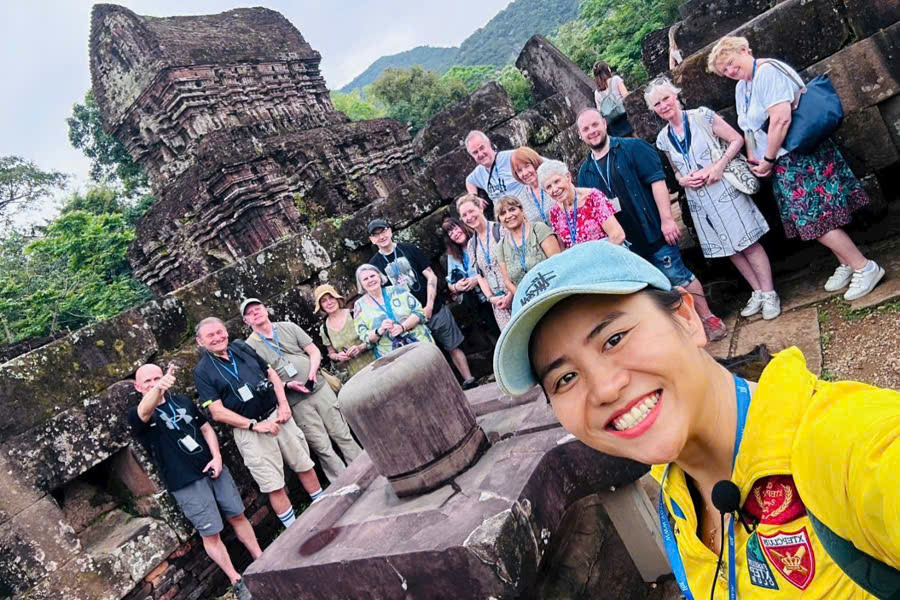
8:00 AM – Pick-up from Hoi An Hotel
Your private guide and driver meet you at your hotel in Hoi An. The morning air is still fresh as you leave the town behind, passing rice fields, quiet villages, and misty countryside views on the way toward My Son Sanctuary.
9:20 AM – Explore the Ancient My Son Temples
Arriving at the sanctuary, you step into a peaceful valley surrounded by jungle-covered mountains. The sound of birds and rustling leaves replaces the city noise. As you walk among the red-brick Cham towers, your guide reveals stories of Hindu gods, ancient rituals, and a lost civilization hidden in the forest for centuries.
11:15 AM – Traditional Cham Music Show
After exploring the ruins, you pause to enjoy a live Cham performance. The soft rhythm of drums, gongs, and flute fills the air, while dancers in traditional costumes bring ancient stories to life. It’s a cultural moment that connects the past with the present.
12:15 PM – Visit a Local Rice Paper Making Village
On the way back, you stop at a small local workshop where families still make rice paper by hand. You watch thin sheets dry under the sun, learn the simple traditional process, and experience everyday rural life in Central Vietnam.
1:30 PM – Return to Hoi An Hotel
The journey ends as you relax on the drive back. The countryside slowly fades behind you, leaving you with a deeper appreciation of Cham history, local culture, and the peaceful beauty of Central Vietnam.
[WhatsApp Us] [Book This Tour]> Discover the Mysteries of My Son Sanctuary! Book Your Private Tour Now and Experience the Magic Up Close. Secure Your Spot Today for an Unforgettable Journey!
How much is the My Son Sanctuary tour?
Private My Son Half Day Tour from Da Nang Pricing
| Group Size | Tour Price (VND) |
|---|---|
| 1 Person | 2,900,000 |
| 2 Persons | 3,050,000 |
| 3 Persons | 3,550,000 |
| 4 Persons | 3,700,000 |
Includes: Private vehicle, English-speaking guide, entrance tickets, bottled water, and hotel pick-up/drop-off in Da Nang.
Excludes: Meals, Tipping, Personal expenses, Soft drinks
Private My Son & Hoi An Full Day Tour with Lantern Boat Ride from Da Nang
| Group Size | Tour Price (VND) |
|---|---|
| 1 Person | 3,960,000 |
| 2 Persons | 4,530,000 |
| 3 Persons | 5,060,000 |
| 4 Persons | 5,450,000 |
Includes: Private vehicle, English-speaking guide, entrance tickets, lantern boat ride, bottled water, and hotel pick-up/drop-off in Da Nang.
Excludes: Meals, Tipping, Personal expenses, Soft drinks
Private My Son, Marble Mountains, Hoi An Tour from Da Nang
| Group Size | Tour Price (VND) |
|---|---|
| 1 Person | 4,590,000 |
| 2 Persons | 4,930,000 |
| 3 Persons | 5,470,000 |
| 4 Persons | 5,980,000 |
Includes: private vehicle, English-speaking guide, entrance tickets, bottled water, and hotel pick-up/drop-off in Da Nang.
Excludes: Meals, Tipping, Personal expenses, Soft drinks, lantern boat ride
Best time to visit My Son Sanctuary?
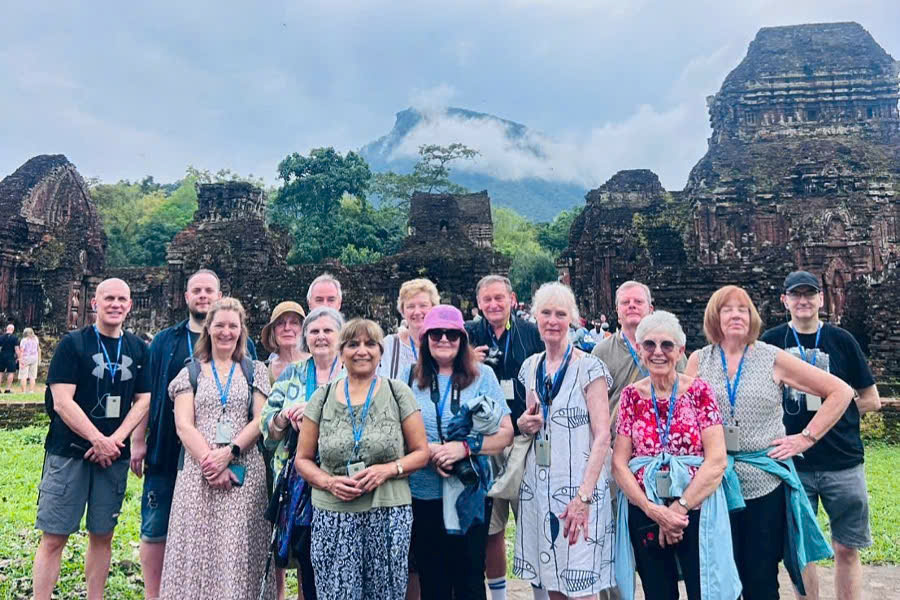
Best time of the day
In the dry season
The best time of the day to visit My Son Sanctuary during the dry season is early morning (6:00–8:30/9:00 AM) or late afternoon (3:00–5:30 PM), as the site opens from 6:00 AM to 5:00 PM.
Early morning visits are highly recommended for cooler temperatures, softer sunlight, and fewer crowds. Arriving right at opening time also gives you a better chance to explore the temples before it gets busy. The first ticket sales and buggy transfers start at 6:00 AM.
Afternoon visits are also comfortable, as the heat begins to drop and the site becomes quieter again. However, the last tickets are sold around 5:00 PM, and visitors should plan to arrive between 1:00 and 2:30 PM when coming from Da Nang or Hoi An to allow enough time for sightseeing.
For early morning tours, it’s best to leave your hotel around 5:00 AM. Since food options inside My Son are limited in the morning, many travelers prepare a breakfast box from their hotel the night before.
For a smoother experience, especially if you want deeper historical insight, joining a guided tour or arranging a private transfer is highly recommended.
In rainy season
During the rainy season at My Son Sanctuary, the weather is generally cooler throughout the day thanks to regular rainfall, so there is less need to avoid hot midday hours like in the dry season.
However, rain showers can be unpredictable, so it’s best to check the weather forecast 1–2 days in advance and choose a time when the chance of rain is lowest. A simple search like “My Son Sanctuary weather” can help you plan your visit more accurately.
From October to January, the region may experience typhoons or heavy storms, which can make visiting unsafe or less enjoyable. On such days, it’s better to postpone your trip.
If you don’t mind light rain, you can still visit during short dry windows in the day, but flexibility is key during the wet season.
Best time of the month
Late December to late February (Best time)
This is the most recommended period to visit. The weather is at its most pleasant and stable, with the rainy season mostly gone. Roads and temple paths are dry, making it easy to walk and explore. Temperatures are cooler and very comfortable, ideal for sightseeing, photography, and outdoor activities. The atmosphere is also peaceful and fresh after the rainy months.
March to end of August (Dry season)
This period brings more sunshine and generally dry weather, making it good for clear views and photography. However, temperatures can rise, especially around midday, so early morning or late afternoon visits are recommended for a more comfortable experience.
September to December (Rainy season)
This is the wet season, with more frequent showers and occasional heavy rain. Travel is still possible, but visitors should check the weather forecast carefully and stay flexible. In some cases, typhoons may affect the area, so planning ahead is important.
What to see at My Son Sanctuary?
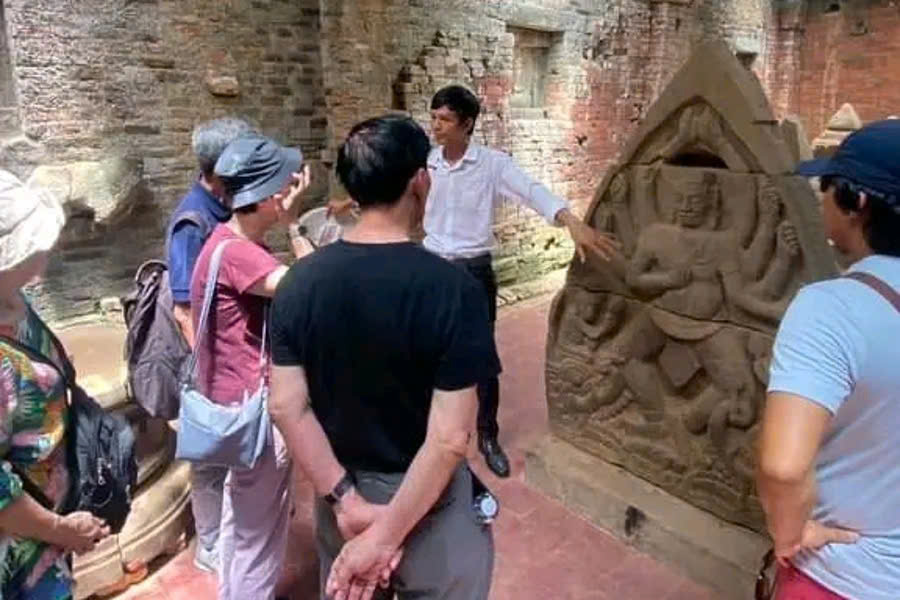
Main group of B, C, D
The temple clusters in Groups B, C, and D of My Son Sanctuary were built between the 7th and 13th centuries, during the height of the Champa Kingdom, when Hindu temple architecture was at its peak in Central Vietnam.
Among them, Group C is the most outstanding and best preserved, known for its detailed brick reliefs, inscriptions, and relatively intact tower structures. Groups B and D also retain important temple foundations and architectural elements, offering a clear view of the original sacred layout and construction style.
Together, these groups are considered the core of the sanctuary, both for their historical importance and their high level of preservation compared to other areas of the site.
Group A
Group A of My Son Sanctuary was once the most important religious center of the Cham Kingdom, dedicated mainly to Shiva worship. Although heavily damaged during the Vietnam War, it still contains impressive temple foundations and ruins that reflect its former grandeur, spiritual significance, and advanced Cham architecture.
Group G
Group G of My Son Sanctuary is one of the areas that has undergone significant restoration work with the support of international experts, including teams associated with the Politecnico di Milano (Milan Polytechnic University). The project focused on stabilizing damaged brick structures, documenting original construction techniques, and carefully reconstructing collapsed elements while preserving authenticity. Today, Group G offers visitors a clearer view of Cham architectural style and modern conservation efforts working to protect this ancient UNESCO site.
Group E, F
Groups E and F of My Son Sanctuary were originally built between approximately the 7th and 13th centuries during the peak of the Champa Kingdom, serving as Hindu temple complexes dedicated mainly to Shiva.
Over time, these structures suffered severe damage from natural decay and were heavily impacted during the Vietnam War. In modern times, Indian archaeologists have contributed significantly to their restoration, working to stabilize surviving brick walls, reconstruct collapsed sections, and preserve original Cham architectural features. Today, Groups E and F reflect both their ancient Hindu-Cham heritage and careful international conservation efforts.
Group K
Group K of My Son Sanctuary was built during the late period of the Champa Kingdom, roughly between the 10th and 13th centuries, as part of a smaller Hindu temple cluster dedicated mainly to Shiva worship.
Historically, Group K reflects the final phase of Cham architecture, when construction became more modest compared to earlier grand temple groups, but still maintained strong religious symbolism and brick-building traditions. Like many parts of My Son, it was severely damaged over time, especially during the Vietnam War.
In recent decades, Indian archaeologists have been involved in its conservation, helping to stabilize remaining structures and preserve original architectural elements. Their restoration work focuses on maintaining authenticity while protecting what remains of this important heritage site.
Group H
Group H of My Son Sanctuary was constructed during the late Champa period (around the 9th–13th centuries) as part of a Hindu temple complex dedicated mainly to Shiva. It once included brick towers and auxiliary structures that reflected the refined but evolving architectural style of the Champa civilization.
Over time, Group H suffered severe deterioration from natural decay and was heavily damaged during the Vietnam War, leaving mostly ruins and foundations today. In modern restoration efforts, Indian archaeologists have contributed to stabilizing the remaining structures, preserving original layouts, and protecting surviving architectural details. This allows visitors to better understand both the original sacred design and the long-term conservation process of the site.
Main Sanctuary (Kalan Tower)
At the heart of the site is the Main Sanctuary (Kalan Tower), a 24-meter brick temple originally dedicated to the Hindu god Shiva. One of its greatest architectural mysteries is that the red bricks were joined without any visible mortar, a technique that still puzzles researchers today.
Ancient Royal Road
Visitors can also see the Ancient Royal Road, an 8-meter-wide pathway once used by royalty and priests, leading directly into the sacred center of the complex.
Wartime ruins
Scattered throughout the site are wartime ruins and bomb craters, silent reminders of the damage caused during the Vietnam War, standing in contrast to ongoing restoration efforts by international experts.
Cham dance show
Cultural experiences are also part of the visit, with traditional Cham dance performances—such as the Apsara dance—presented on an open-air stage near the entrance, accompanied by Cham music.
Before entering the main temple area, visitors can stop at the My Son Museum (about 2 km away), which displays excavated sculptures, artifacts, and tools that help explain the history of the ancient Cham civilization.
Traditional Cham Performance Show Schedule at My Son
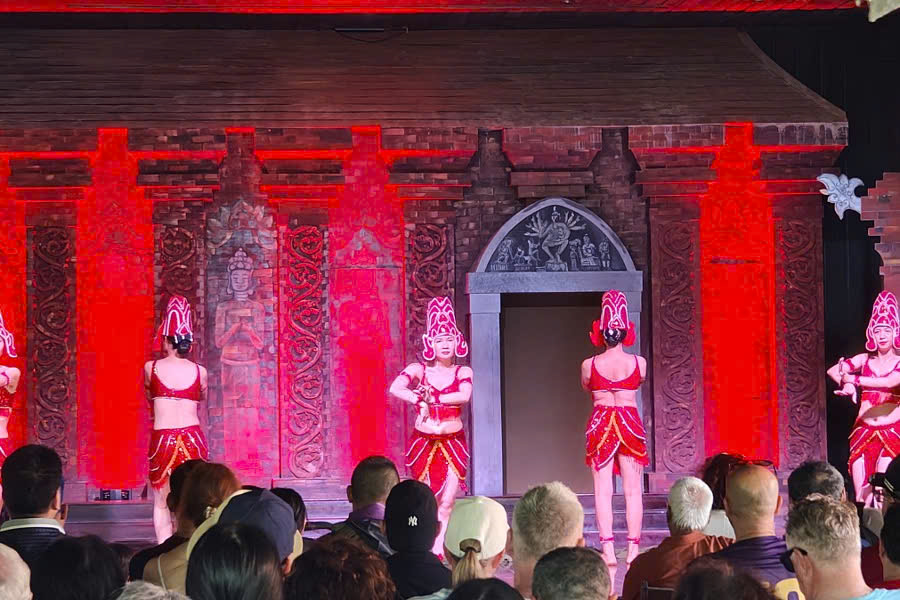
At Performance House
- Show 1: 9:45 AM
- Show 2: 10:30 AM
- Show 3: 11:15 AM
- Show 4: 2:00 PM
- Show 5: 4:00 PM
At Tower G Area
- Morning Performance: 9:00 AM
- Afternoon Performance: 2:45 PM
If weather conditions are unfavorable, performances at Tower G will be temporarily suspended.
“Echoes of My Son” Performance
At B, C, D Towers Area
- Morning: 9:00 AM
- Afternoon: 2:45 PM
Held on the 15th day of every month (Gregorian calendar) at the B, C, D Tower Complex.
Cham Folk Singing Performance
H Tower Slope Area
- Morning: 9:00 AM
- Afternoon: 2:45 PM
Performed every Monday, Wednesday, and Friday.
This cultural program offers visitors a wonderful opportunity to experience traditional Cham music, dance, and folk performances while exploring the ancient temple complex of My Son Sanctuary.
My Son Sanctuary Entrance Fee?
The cost of admission to My Son Sanctuary is determined by age and country. The Apsara cultural dance performance, the museum, the temples, and round-trip electric buggy transports from the main entrance to the ruins are all included in the ticket.
Adults from abroad (15+): 150,000 VND
Vietnamese Adults (15+): 100,000 VND
Children (5–15): 30,000–50,000 VND
Children under 5: Free (with a 30,000 VND small transfer/buggy fee).
What to Wear and Bring?
What to Wear
When visiting My Son Sanctuary, it’s best to choose light, breathable clothing such as cotton or linen, especially in warm or humid weather. Comfortable walking shoes or sandals with good grip are highly recommended, as the site involves uneven paths and temple ruins.
Since this is a sacred Hindu religious site, visitors should dress modestly by covering shoulders and knees out of respect. A hat or cap is also useful for sun protection, especially during midday visits.
What to Bring
Bring essentials such as water, sunscreen, and insect repellent, as you will be walking outdoors for an extended period. A small backpack is useful for carrying personal items comfortably.
A camera or smartphone is highly recommended, as My Son offers excellent photography opportunities. During rainy season, a light raincoat or umbrella can also be helpful.
If visiting early in the morning, you may also want to bring a light breakfast or snack, as food options inside the site are limited.
Useful Tips to Visit My Son UNESCO World Heritage Site?
Go Early in the Morning or Late in the Afternoon
The best time to visit is early morning (around 6:00–9:00 AM) or late afternoon (3:00–5:30 PM). The weather is cooler, the light is softer for photos, and you can avoid the midday heat and larger crowds.
Always Check the Weather Forecast
Weather can change quickly, especially during the rainy season. Checking the forecast 1–2 days before your trip helps you choose the best time and avoid heavy rain or typhoons.
Wear Comfortable Walking Shoes
You will walk on uneven paths, grass, and stone areas around temple ruins. Lightweight, non-slip shoes or sneakers are the best choice for safety and comfort.
Dress Modestly and Respectfully
My Son is a sacred Hindu site, so it’s recommended to wear clothing that covers your shoulders and knees. This shows respect for the cultural and religious heritage.
Bring Water and Sun Protection
The site is mostly outdoors, so bring bottled water, sunscreen, sunglasses, and a hat. These essentials are very important, especially in hot or sunny weather.
Hire a Local Guide for Better Understanding
A knowledgeable guide will help explain the history of the Cham Kingdom, temple meanings, and architectural details that you might miss when exploring alone.
Visit the museum first
The small museum near the entrance provides helpful background information, artifacts, and context that make your visit to the temples more meaningful.
Prepare for Limited Food Options
There are few food or drink options inside the site, especially in the morning. It’s a good idea to bring snacks or arrange a breakfast box from your hotel.
Respect the Heritage and Ruins
Do not climb on the temples or touch fragile structures. Preserving the site is important so future generations can continue to enjoy this UNESCO World Heritage Site.
Consider a Private Tour for Convenience
A private tour offers flexible timing, comfortable transport from Da Nang or Hoi An, and a more personalized experience without rushing through the site.
6 Best Things to do around My Son Sanctuary
Visit a Local Rice Paper Village
A visit to a traditional rice paper village offers a fascinating glimpse into rural life in Central Vietnam. Watch local families carefully spread rice batter onto cloth-covered steamers before drying the delicate sheets under the sun. This centuries-old craft remains an important part of Vietnamese cuisine and culture. It’s a wonderful opportunity to meet local artisans, learn about their daily lives, and experience authentic village traditions beyond the famous temple ruins.
Visit the Ancient Citadel of Tra Kieu
Located just a short drive from My Son Sanctuary, the ancient Citadel of Tra Kieu was once the capital of the Champa Kingdom. Rich in history and archaeological significance, this site helps visitors better understand the rise of Cham civilization before exploring My Son. As you walk through the peaceful countryside, your guide will share stories of royal courts, ancient battles, and the cultural exchanges that shaped Central Vietnam over a thousand years ago.
Combine My Son Afternoon Tour & Hoi An Ancient Town with Lantern Boat Ride
This combination tour allows you to experience two UNESCO treasures in one unforgettable day. Spend the afternoon exploring the mysterious red-brick temples of My Son before heading to Hoi An Ancient Town as the sun begins to set. In the evening, stroll through lantern-lit streets, admire centuries-old merchant houses, and enjoy a peaceful boat ride on the Hoai River surrounded by glowing lantern reflections. The contrast between ancient Hindu temples and Hoi An’s charming riverside atmosphere creates a truly magical experience.
Combine My Son Sunrise Tour with Visiting Thanh Ha Fish Market
Start your day before dawn and witness My Son Sanctuary at its most peaceful. The cool morning air, soft golden light, and absence of crowds create perfect conditions for exploring the ancient temples. After your visit, continue to Thanh Ha Fish Market, where local fishermen unload their fresh catch and vendors begin the day’s trading. The lively atmosphere, colorful fishing boats, and authentic local interactions offer a fascinating glimpse into daily life along Central Vietnam’s waterways.
Army US Jeep Morning Tour to My Son Sanctuary
Experience My Son Sanctuary in a unique and adventurous way aboard a classic U.S. Army Jeep. Traveling through quiet villages, rice fields, and scenic countryside roads, you’ll enjoy open-air views and excellent photo opportunities along the journey. The vintage Jeep adds a sense of nostalgia and excitement while allowing you to discover hidden corners of rural Quang Nam that many visitors never see. It’s an ideal choice for travelers seeking both history and adventure.
Combine My Son Morning Tour & Coffee at Old Brick Factory
After exploring the ancient Cham temples, unwind at the charming Old Brick Factory Café, one of the most unique coffee spots in the countryside near Hoi An. Surrounded by rice fields and thoughtfully restored industrial architecture, the café offers a relaxing atmosphere to reflect on your morning adventure. Enjoy freshly brewed Vietnamese coffee, homemade pastries, and beautiful views while escaping the crowds. This combination perfectly balances cultural discovery with a peaceful local experience.
Guided Tours to My Son Sanctuary Vietnam
My Son Sunrise Tour from Hoi An
Experience My Son at its most magical as the morning mist drifts through ancient temple ruins. Enjoy cooler temperatures, fewer crowds, beautiful sunrise photography opportunities, and fascinating stories of the Champa Kingdom from your expert local guide.
My Son Sanctuary Sunset Tour
Discover the beauty of My Son in the late afternoon when golden sunlight illuminates the red-brick temples. This relaxed tour offers cooler weather, fewer visitors, and a peaceful atmosphere perfect for exploring Vietnam’s most important Cham heritage site.
My Son Sanctuary & Marble Mountains Tour
Combine two of Central Vietnam’s most iconic attractions in one unforgettable day. Explore the ancient Cham temples of My Son before discovering hidden caves, pagodas, and panoramic viewpoints at the spectacular Marble Mountains.
My Son Sanctuary & Hoi An Tour from Da Nang
Journey through centuries of history by visiting My Son Sanctuary and the charming streets of Hoi An Ancient Town. Ancient temples, cultural landmarks, lantern-lit scenery, and local cuisine create a perfect full-day experience.
My Son Sanctuary Private Tour
Enjoy the flexibility and comfort of a personalized journey to My Son Sanctuary. Travel at your own pace with a knowledgeable guide, private transportation, and deeper insights into the fascinating history and architecture of the Champa civilization.
Explore My Son Temples in Vietnam with Premium Travel Vietnam
As you explore the ancient wonders of My Son Sanctuary, let Premium Travel Vietnam be your trusted companion in discovering the rich history, culture, and hidden stories of the Champa Kingdom.
With expertly guided tours and comfortable private transport, Premium Travel Vietnam helps you experience My Son in a deeper and more meaningful way—avoiding the crowds, understanding the symbolism of each temple, and enjoying a smooth journey through one of Vietnam’s most important UNESCO World Heritage Sites.
Whether you are traveling from Da Nang, Hoi An, or Hue, Premium Travel Vietnam ensures a seamless experience with personalized service, local expertise, and flexible itineraries tailored to your interests. From early morning visits to peaceful sunset explorations, every journey is designed to make your visit both comfortable and unforgettable.
Book with Premium Travel Vietnam to enrich your visit to My Son Temples and turn your Central Vietnam journey into a truly memorable cultural experience.
Frequently Asked Questions About My Son Sanctuary Vietnam
Is My Son Sanctuary worth visiting?
Yes. My Son Sanctuary is one of Vietnam’s most important historical and cultural sites. As a UNESCO World Heritage Site, it offers a unique opportunity to explore ancient Cham temples, learn about the Champa Kingdom, and experience a side of Vietnam’s history that dates back more than 1,000 years.
How much time do you need at My Son Sanctuary?
Most visitors spend between 2 and 3 hours exploring the temple complex, watching the traditional Cham performance, and visiting the museum. History enthusiasts may wish to stay longer.
What is the best time to visit My Son Sanctuary?
The best time to visit is from late December to late February when temperatures are cooler and rainfall is generally lower. For the best experience, arrive early in the morning or later in the afternoon to avoid the heat.
How far is My Son Sanctuary from Hoi An?
My Son Sanctuary is approximately 40 kilometers (25 miles) from Hoi An and takes about 1 hour by car, depending on traffic conditions.
How far is My Son Sanctuary from Da Nang?
The sanctuary is around 70 kilometers (43 miles) from Da Nang. The drive usually takes about 1.5 hours.
Can I visit My Son Sanctuary without a guide?
Yes, you can explore independently. However, a knowledgeable guide can provide valuable insights into the history, symbolism, architecture, and religious significance of the temples.
What should I wear to My Son Sanctuary?
Wear lightweight, comfortable clothing and walking shoes. Since My Son is a sacred religious site, modest attire covering the shoulders and knees is recommended.
Is there a dress code at My Son Sanctuary?
There is no strict dress code, but respectful clothing is encouraged due to the site’s cultural and religious importance.
What is the difference between My Son Sanctuary and Angkor Wat?
While both are ancient temple complexes influenced by Hinduism, My Son was the spiritual center of the Champa Kingdom in Vietnam, whereas Angkor Wat was built by the Khmer Empire in Cambodia. My Son is smaller but offers a more intimate and less crowded experience.
Can I combine My Son Sanctuary with Hoi An in one day?
Absolutely. Many travelers visit My Son in the morning and spend the afternoon or evening exploring Hoi An Ancient Town, making it one of the most popular day-trip combinations in Central Vietnam.
Are there restaurants inside My Son Sanctuary?
There are a few basic food and drink options near the entrance area, but choices are limited. It is a good idea to bring water and light snacks, especially for early morning visits.
What temple groups should I not miss?
Groups B, C, and D are considered the most important and best-preserved sections of the sanctuary. Group G showcases impressive restoration work, while Groups E and F provide insight into ongoing conservation efforts.
Can children visit My Son Sanctuary?
Yes. Families with children often enjoy the open spaces, cultural performances, and easy walking routes. However, bringing water, sun protection, and comfortable footwear is recommended.
Why is My Son Sanctuary a UNESCO World Heritage Site?
UNESCO recognized My Son in 1999 for its outstanding cultural value as the most important surviving center of the ancient Champa civilization and for its unique blend of Hindu religious architecture and local Cham artistic traditions.
What are the best tours to My Son Sanctuary?
Popular options include sunrise tours, private guided tours, sunset tours, and combination trips that include Hoi An Ancient Town, Marble Mountains, or countryside village experiences. These tours provide transportation, expert guides, and a more enriching visit.
Final Thoughts on Visiting My Son Sanctuary
A visit to My Son Sanctuary is much more than a sightseeing trip—it’s a journey into the heart of the ancient Champa Kingdom and one of Southeast Asia’s most fascinating cultural treasures. Surrounded by lush mountains and peaceful countryside, the sanctuary offers a unique blend of history, architecture, spirituality, and natural beauty.
Whether you’re exploring the well-preserved temple groups, learning about Hindu influences on Cham culture, watching a traditional Cham performance, or simply admiring the craftsmanship of the ancient brick towers, My Son provides an experience that is both educational and inspiring.
With proper planning, the right timing, and a knowledgeable guide, your visit can become one of the highlights of your Central Vietnam adventure. Whether you’re traveling from Hoi An, Da Nang, or Hue, My Son Sanctuary deserves a place on your itinerary and offers a deeper understanding of Vietnam’s rich cultural heritage.
If you’re ready to explore this remarkable UNESCO World Heritage Site, consider joining one of Premium Travel Vietnam’s expertly guided tours for a comfortable, insightful, and unforgettable journey through the ancient temples of My Son.
About the Author – Mr. Viet Nguyen
Mr. Viet Nguyen is the founder and CEO of Premium Travel Vietnam, a leading local tour operator specializing in private and customized travel experiences throughout Central Vietnam. With more than a decade of experience in the tourism industry, Viet has helped thousands of international travelers discover the rich culture, history, and natural beauty of destinations such as Hoi An, Da Nang, Hue, My Son Sanctuary, and Phong Nha.
As a passionate advocate for authentic travel experiences, he works closely with local guides, communities, and heritage experts to create meaningful journeys that go beyond typical sightseeing. His deep knowledge of Central Vietnam’s UNESCO World Heritage Sites, local traditions, and hidden gems allows visitors to gain a deeper understanding of the region’s history and culture.
Through his travel guides and tour experiences, Viet aims to help travelers explore Vietnam with confidence while supporting sustainable and responsible tourism. When he’s not designing new itineraries, he enjoys researching local history, meeting travelers from around the world, and sharing insider tips on the best places to visit in Vietnam.
Learn more about Premium Travel Vietnam and discover expertly crafted tours designed to showcase the very best of Central Vietnam.